

- Home
- News, Articles & Reviews
We are hiring! Please click here to join our growing magazine delivery team in Gloucestershire!
Areas
Pets & Wildlife
Archive

Winged friends – imagine they’re just flying hamsters
All Areas > Pets & Wildlife > Wildlife Matters
Author: Anna McQuillan, Posted: Tuesday, 23rd June 2026, 09:50
I’ve realised that many of my articles involve me attempting to save the reputations of org-anisms, without really knowing if it’s necessary. You may already have had a positive perception of spiders before my article last September. Maybe the general perception from readers is positive and I’m preaching to the choir. Anyhow, I’m doing it again because this time I’m talking about bats.
Bats are the only mammals capable of true powered flight. You might think of others, like flying squirrels, but technically they can only glide. The key distinction is that bats use muscular wingbeats to gener-ate both lift and thrust, allowing sustained, controlled flight. Therefore, we can say they fly, like birds.
Seeing through sound
At night when light is poor, bats use echolocation to navigate their surroundings, just like dolphins in water. This is done through a selective output of blips which, when reflected back, allow the bat to ‘see’ their surroundings. To compare it to human vision, we rely on visible light being reflected back to our eyes for sight, whereas bats rely on sound being reflected. This allows them to hunt for nocturnal insects, which all 18 of our UK bat species do.
A variety of diets
This is not the case for bats globally. In fact, echolocation is mostly (though zoology always has exceptions) only found in microbats rather than larger species that will primarily use sight.
Throughout Earth there is a huge variety of feeding strategies among bats, ranging from the famous vampire bat drinking blood – that’s called being sanguivorous – to the fish-eating Myotis that uses echolocation to fish! Instead of being herbivorous, this species is piscivorous – yet another fantastic word in the world of zoology.
Hanging around?
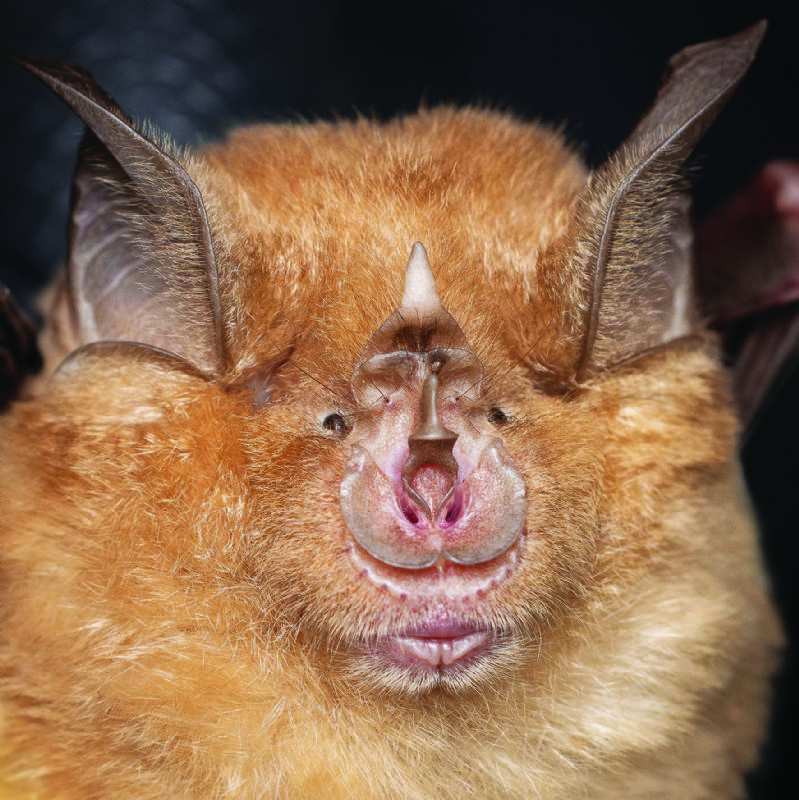
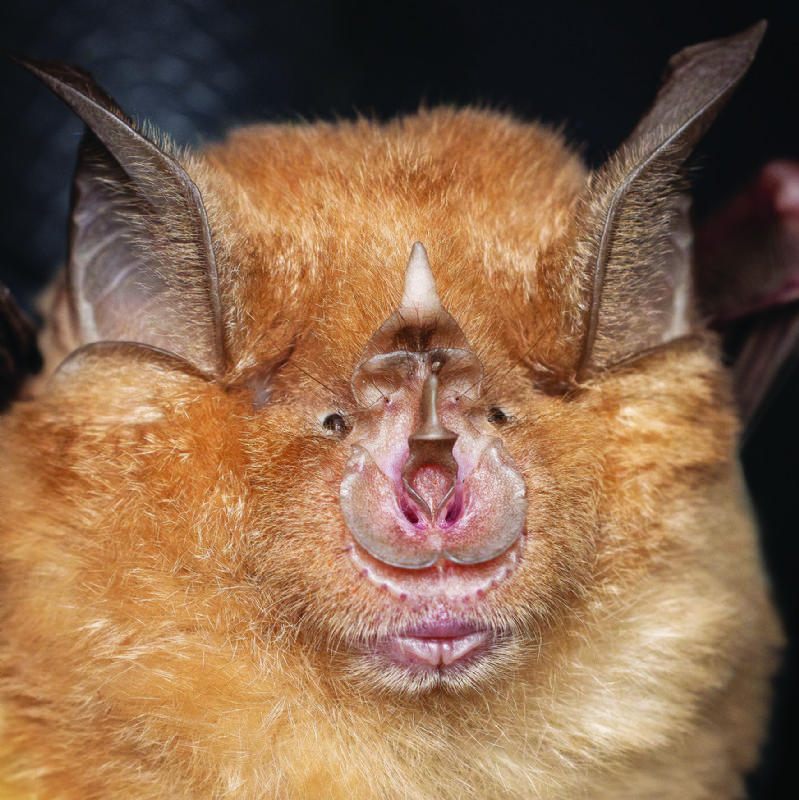
I would like to clear up a misconception: not all bats sleep in the stereotypical fashion. Actually, only two UK species have to be freely hanging to roost. This includes the horseshoe bat species, named so because of their horseshoe-shaped noses. The others are ‘crevice dwellers’, wedging themselves into little spaces in trees, eaves or rocks.
But how do they do it? Luckily horseshoe bats have a special bit of natural engineering that makes this simple. Take a moment to look at your own hand and relax it. You’ll notice your hand opens and your fingers fall loose. This is the opposite to these bats.
When in the hanging position, their body weight pulls them downwards, creating a clench-ing from their tendons as they are contracted. Because of this, they can sleep, feed and even give birth upside down – and the baby has to grab on pretty quickly!
This time of year is prime for seeing bats. On clear, summer evenings, as we make our way to beer gardens, bats make their way to the sky on the hunt for flying insects. I find it a relaxing addition to the evening; noticing the transition of the late-singing blackbird into the subtle beeping of bats. It truly is one of my favourite times of year.Anna McQuillan is a Research Master's zoology graduate. She is the founder of Hopefully: A Fundraiser for Wildlife, a non-profit company that organises fundraising events for wildlife. Outside of working she is still in pursuit of observing nature, be it wildlife photography or underwater while scuba diving. Her favourite UK animal is the kestrel.
Copyright © 2026 The Local Answer Limited.
Unauthorized use and/or duplication of this material without express and written permission from this site's author and/or owner is strictly prohibited. Excerpts and links may be used, provided that full and clear credit is given to The Local Answer Limited and thelocalanswer.co.uk with appropriate and specific direction to the original content.More articles you may be interested in...





© 2026 The Local Answer Limited - Registered in England and Wales - Company No. 06929408
Unit H, Churchill Industrial Estate, Churchill Road, Leckhampton, Cheltenham, GL53 7EG - VAT Registration No. 975613000You are leaving the TLA website...
You are now leaving the TLA website and are going to a website that is not operated by us. The Local Answer are not responsible for the content or availability of linked sites, and cannot accept liability if the linked site has been compromised and contains unsuitable images or other content. If you wish to proceed, please click the "Continue" button below: