

- Home
- News, Articles & Reviews
We are hiring! Please click here to join our growing magazine delivery team in Gloucestershire!
Areas
Pets & Wildlife
Archive

Wings built for the attack
All Areas > Pets & Wildlife > Wildlife Matters
Author: Anna McQuillan, Posted: Wednesday, 22nd April 2026, 09:00
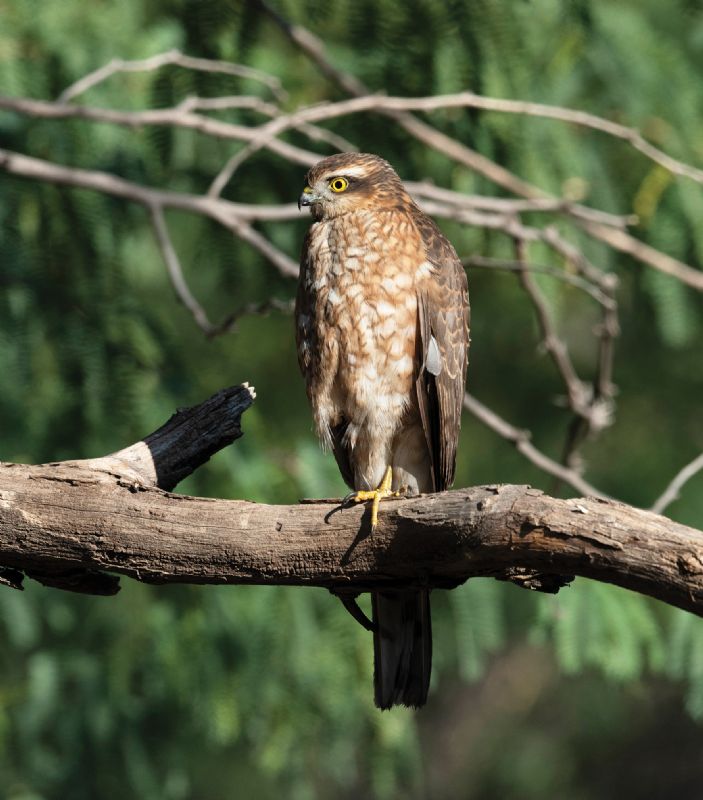
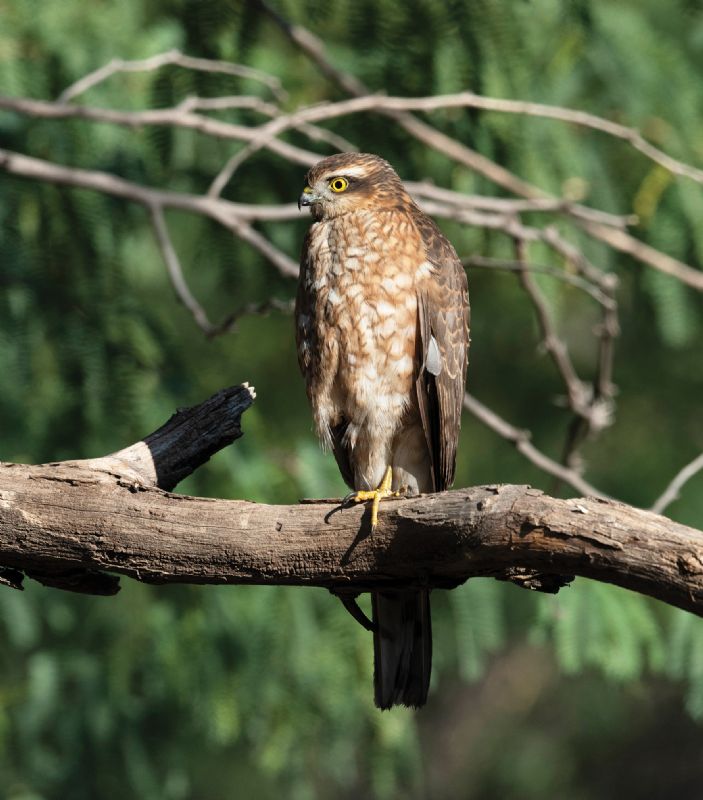 A male sparrowhawk
I’ve mentioned birds a few times during these articles; they are a favourite of mine and a type of nature that you can watch wherever you are.
One of the most exciting birdwatching events is the arrival of a bird of prey. It can be such a dramatic scene change when other animals suddenly scatter or there is an upheaval of alarm calls as everyone alerts each other. It is truly an exciting moment, particularly when I recognise my own innate reaction to nature’s warning calls – a reminder that we were once part of the wild and our natural reactions remain.
Some of my favourite bird encounters have been at WWT Slimbridge. I’ll be watching a peaceful wetland when all of a sudden the black-tailed godwits surge noisily together to the sky. This coordinated swarm hopes to confuse the predator and avoid being the individual that falls victim to those heavy talons.
A woodland hunter that has adapted to urban green spaces
One of the stealthier birds of prey is the sparrowhawk. This species is naturally a woodland hunter but has adapted to urban green spaces, particularly gardens. Their short, broad wings and long, straight tails allow for sharp manoeuvres between trees, or now, fences and buildings.
Consider the shape of different WW2 planes: the small, narrow Spitfires built for quick manoeuvres in dogfights, compared with the larger, heavier Lancaster bombers. This is very similar to specialised shape variety for flight requirements in birds of prey.
Male and female sparrowhawks are distinctly different, a characteristic known as sexual dimorphism. Females are up to 25% larger than males, one of the most drastic size differences in our birds of prey! This size difference means they don’t compete over prey.
Females use their weight to hunt larger birds like pigeons, while the smaller males pursue garden birds such as blue tits. Their threat is so significant that species like the blue tit have developed a specialised alarm call specifically for sparrowhawks, one that other species have learned to react to.
One instance that I’ve seen a sparrowhawk has been at the unfortunate demise of one of our garden pigeons that grew too comfortable around the bird feeders. I could tell the predator was a female because she was large enough to take down a pigeon, and she had grey, darker back feathers with grey barring across the chest – distinctly different to the brown-toned males.
Predators are usually feeding their young at this time of year
At least very little of the pigeon is wasted; anything left is cleared up by the foxes later. It can be sad to come across a scene like this, but remember predators must eat too, and they are usually feeding their young at this time of year.
Particularly in the warmer months, when visual distance isn’t obscured by rain or cloud, birds of prey are easier to spot perched in the branches of distant trees. On warm days with blue skies, look for buzzards using rising air currents to soar to great heights. In woodlands, listen for the sharp, piercing calls of smaller birds of prey, like our sparrowhawk, echoing through the trees.Anna McQuillan is a Research Master's zoology graduate. She is the founder of Hopefully: A Fundraiser for Wildlife, a non-profit company that organises fundraising events for wildlife. Outside of working she is still in pursuit of observing nature, be it wildlife photography or underwater while scuba diving. Her favourite UK animal is the kestrel.
Copyright © 2026 The Local Answer Limited.
Unauthorized use and/or duplication of this material without express and written permission from this site's author and/or owner is strictly prohibited. Excerpts and links may be used, provided that full and clear credit is given to The Local Answer Limited and thelocalanswer.co.uk with appropriate and specific direction to the original content.More articles you may be interested in...





© 2026 The Local Answer Limited - Registered in England and Wales - Company No. 06929408
Unit H, Churchill Industrial Estate, Churchill Road, Leckhampton, Cheltenham, GL53 7EG - VAT Registration No. 975613000You are leaving the TLA website...
You are now leaving the TLA website and are going to a website that is not operated by us. The Local Answer are not responsible for the content or availability of linked sites, and cannot accept liability if the linked site has been compromised and contains unsuitable images or other content. If you wish to proceed, please click the "Continue" button below: