

- Home
- News, Articles & Reviews
We are hiring! Please click here to join our growing magazine delivery team in Gloucestershire!
Areas
Pets & Wildlife
Archive

The critter that’s cool, not creepy
All Areas > Pets & Wildlife > Wildlife Matters
Author: Anna McQuillan, Posted: Friday, 22nd May 2026, 09:00
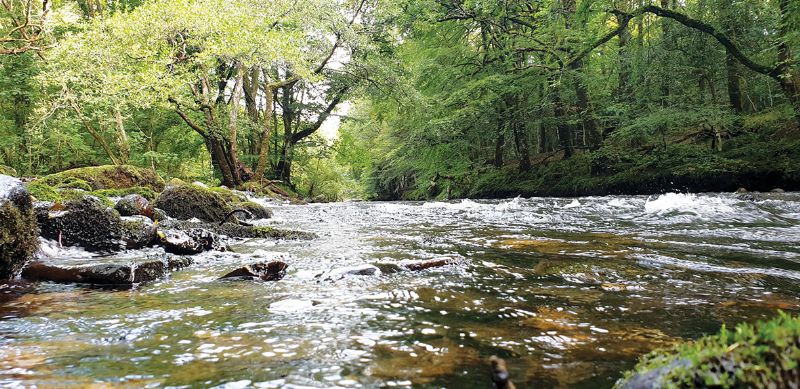
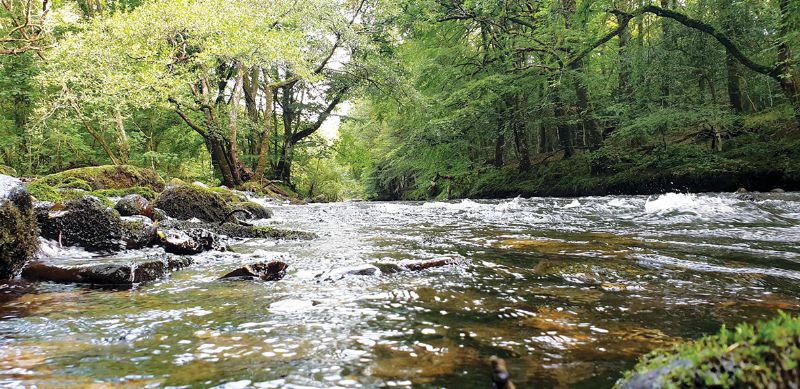
In the warmer months of the British year, we can finally see rivers and streams as inviting rather than just freezing. This month, I’m talking about one of my favourite organisms to find there, and a fun activity for the summer.
This sneaky critter brings a special defensive talent during its juvenile stage. The caddisfly, also known as a sedge fly, lays its eggs on submerged leaves or sticks, allowing the hatched larvae to release directly into the water. These larvae have gills, allowing them to be fully aquatic for this stage of their life.
A cool characteristic
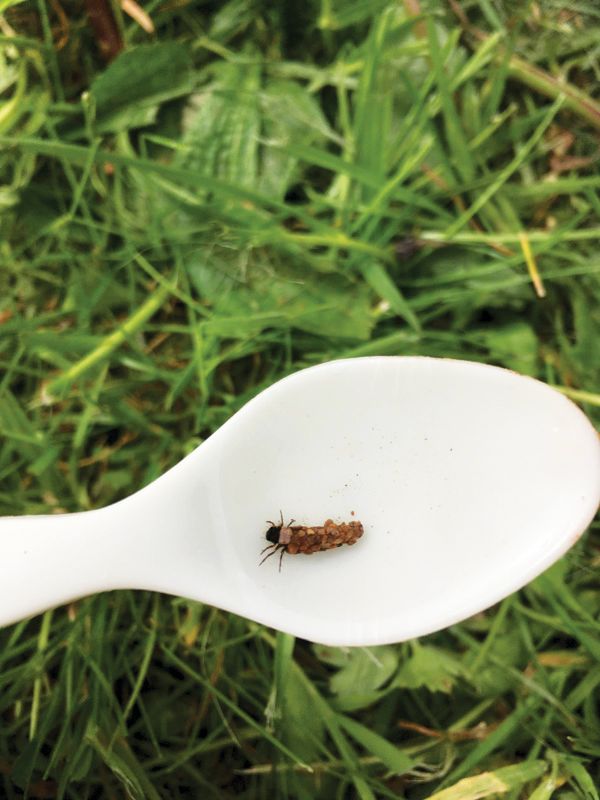
I admit, they aren’t the best lookers, as shown (right) by what was genuinely the best photo I could get. But they have a cool characteristic which won me over: the ability to create their own protective casing out of little bits of rock, sand and debris, all tethered together with silk. This keeps them safely defended in this dangerous, free-for-all environment. They look like they’ve ‘burritoed’ themselves in a duvet, like me on any given evening.
The hard exterior of an insect reminds me of sci-fi armour. This robust series of layers is toughened through a process called sclerotisation where the walls are packed with a strong, interlocked system of proteins. However, our caddisfly has been clever and avoided the need to develop this energetically costly armour. Instead, using its protective case, only the parts left exposed – its head and front legs – need to be sclerotised.
The larvae do much more eating compared to when they are in their adult stage. They boast a large array of feeding strategies, becoming opportun-istic about what they can find.
A key part of the food web
Straight after hatching, the larvae are gatherers or detrito-vores, eating little bits of matter that they happen upon. This develops into filter-feeding, herbivory or predation of other aquatic larvae. Just like most things in nature, this insect forms a key part of the food web as an important prey item for freshwater fish or birds like the dipper.
In childhood, I was lucky enough to live near a freshwater stream where I could muck about and watch these critters. I’d be kidding you if I said I didn’t still do this! When the oppor-tunity arises, I often use stepping stones to venture inwards and gently lift a rock to find the critters hiding below.
For caddisfly larvae, your best bet is a shallow stream that we would describe as granular, which means lots of little rocks or gravel. While wearing a good pair of wellies, hold a shallow tray or bucket in the water and kick from upstream towards it. This technique is called kick-sampling, allowing you to easily observe the creatures in the stream. Just be sure to kindly return them after!
The variety of life found in freshwater is a sign of the water quality and health of the ecosystem. If you find a good spot, you could help keep the area pristine by litter-picking.
Visit the link below for a useful field guide by Imperial College London, which includes some images of caddisfly larvae and can help you identify other creatures you might find.
www.imperial.ac.uk/media/imperial-college/research-centres-and-groups/opal/WATER-4pp-chart.pdfAnna McQuillan is a Research Master's zoology graduate. She is the founder of Hopefully: A Fundraiser for Wildlife, a non-profit company that organises fundraising events for wildlife. Outside of working she is still in pursuit of observing nature, be it wildlife photography or underwater while scuba diving. Her favourite UK animal is the kestrel
Other Images
Copyright © 2026 The Local Answer Limited.
Unauthorized use and/or duplication of this material without express and written permission from this site's author and/or owner is strictly prohibited. Excerpts and links may be used, provided that full and clear credit is given to The Local Answer Limited and thelocalanswer.co.uk with appropriate and specific direction to the original content.More articles you may be interested in...





© 2026 The Local Answer Limited - Registered in England and Wales - Company No. 06929408
Unit H, Churchill Industrial Estate, Churchill Road, Leckhampton, Cheltenham, GL53 7EG - VAT Registration No. 975613000You are leaving the TLA website...
You are now leaving the TLA website and are going to a website that is not operated by us. The Local Answer are not responsible for the content or availability of linked sites, and cannot accept liability if the linked site has been compromised and contains unsuitable images or other content. If you wish to proceed, please click the "Continue" button below: