

- Home
- News, Articles & Reviews
We are hiring! Please click here to join our growing magazine delivery team in Gloucestershire!

You’ve got a slipped disc – what does that really mean?
All Areas > Health & Beauty > Expert Insight
Author: Fru Grace from Encompass Health, Posted: Wednesday, 13th May 2026, 10:20
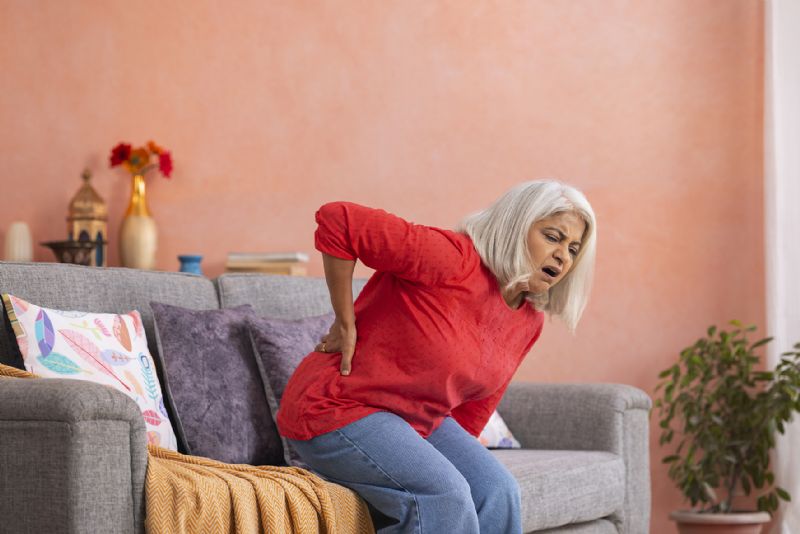
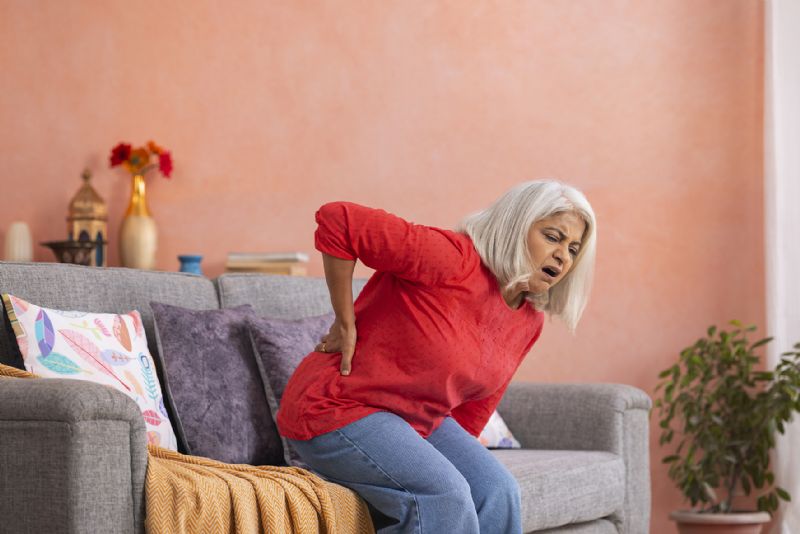 Encompass Health, in Charlton Kings in Cheltenham, helps patients understand the underlying reasons for back pain.
Fru Grace, Clinic Manager and Sports Therapist at Encompass Health in Charlton Kings in Cheltenham, shares her professional insight into understanding and tackling some of the underlying reasons for back pain.
There are many terms relating to disc problems, but having a ‘slipped disc’ is the most common.
This is not a medical term, nothing has ‘slipped’! It can help to understand more about the various terms relating to disc problems and what they really mean.
You may have heard of a disc bulge, slipped disc, prolapsed disc, herniated disc, ruptured disc, degenerative disc or dehydrated disc – these terms are often used interchangeably, but they all describe different stages or types of disc problems in the spine.
Understanding medical terms
An intervertebral disc lies between the vertebrae in the spine, acting like a cushion, as well as a stabiliser to the joint. It has a tough outer layer and a soft gel-like centre.
A disc bulge is often the first issue you may have with your spine, where the disc pushes outward beyond its normal boundary, but the outer layer stays intact. This may not cause any symptoms and is a very common issue of the spine.
A slipped disc is a non-medical term, often used for a prolapsed or herniated disc. A disc prolapse is when the soft inner gel pushes into a weak point in the outer layer, but doesn’t break through fully (stretched or partially torn), while a herniated disc is when the outer layer has a tear and the gel protrudes. Both of these can cause back pain and leg pain (sometimes severe) if the disc or inflammation around it, irritates or compresses a nerve. A ruptured disc, is an advanced herniation.
What causes the damage?
Any disc can prolapse, most commonly seen in the lower back or neck. More men than women develop a disc prolapse and generally between the ages of 30 to 50-years-old. Discs can also fracture.
Symptoms vary due to the severity of the prolapse or herniation, but in general, the larger the prolapse, the more severe the symptoms.
A prolapse can come on suddenly, accompanied by severe pain. Various things can trigger this including bending or twisting suddenly or awkwardly, lifting and even sneezing – essentially something that puts pressure on the disc. In many cases, symptoms improve with time as the bulge regresses naturally and can disappear completely. But, there is a weakness left within the disc and sufferers will often suffer a reoccurrence.
How do you know there’s an issue with your discs?
Symptoms include sharp, intense back pain, generally eased by lying still. If a nerve root has been irritated by inflammation or the bulging disc, then pain will be felt anywhere along that nerve. For example, in a lower back prolapse, symptoms can be felt into the bottom and down the leg, while a prolapse in the neck can result in pain sensations in the shoulder and arm.
Two other disc issues that are often referred to are degeneration and dehydration. A degenerated disc, is simply as it sounds, where the disc is suffering age and activity related wear and tear that can lead to bulging or herniation. While a dehydrated disc, again as it sounds, has lost water content. In both cases, the disc will become less flexible and thinner, and less useful at its job of cushioning and stabilising, which can lead to other complications or pain.
When you’re in pain, what’s the best course of action?
The most important advice for disc sufferers, is to keep the spine moving. Clearly if the pain is intense, this will be difficult, but while resting the back is important, staying active is key to a swifter recovery.
As movement in the spine is so important, seeking treatment from a chiropractor (who will move the specific joints in question) can provide pain relief and aid repair. Strengthening your core muscles, to protect the spine, will aid recovery and reduce the chance of it happening again.
Pain killers and anti-inflammatories are regularly prescribed and do have their benefits – enabling movement and exercise, as well as undisturbed sleep. But they should not be relied upon or seen as ‘treatment’, they are simply masking the pain, not aiding recovery and shouldn’t be seen as a long-term option.
The need for surgery is very rare but is an option for most severe cases. A surgeon will provide details of the risks and advantages of operative intervention.
MBST, magnetic resonance therapy, is a treatment which gives disc sufferers a long-term solution. It provides pain relief (by way of the anti-inflammatory effects), accelerated healing (from cellular stimulation to promote repair and regeneration) and the prevention of recurrence (due to the improved integrity of the disc).
To find out more about chiropractic and MBST treatments at Encompass Health visit encompasshealth.uk
Copyright © 2026 The Local Answer Limited.
Unauthorized use and/or duplication of this material without express and written permission from this site's author and/or owner is strictly prohibited. Excerpts and links may be used, provided that full and clear credit is given to The Local Answer Limited and thelocalanswer.co.uk with appropriate and specific direction to the original content.More articles you may be interested in...





© 2026 The Local Answer Limited - Registered in England and Wales - Company No. 06929408
Unit H, Churchill Industrial Estate, Churchill Road, Leckhampton, Cheltenham, GL53 7EG - VAT Registration No. 975613000You are leaving the TLA website...
You are now leaving the TLA website and are going to a website that is not operated by us. The Local Answer are not responsible for the content or availability of linked sites, and cannot accept liability if the linked site has been compromised and contains unsuitable images or other content. If you wish to proceed, please click the "Continue" button below: