

- Home
- News, Articles & Reviews
We are hiring! Please click here to join our growing magazine delivery team in Gloucestershire!

Back pain – it’s just my age
All Areas > Health & Beauty > Expert Insight
Author: Fru Grace, Posted: Monday, 16th February 2026, 09:00
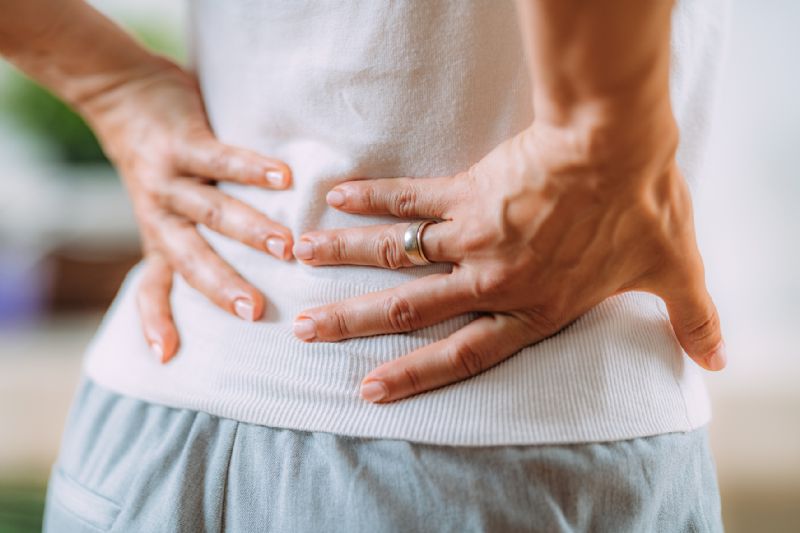
Fru Grace of Encompass Health discusses what contributes to wear-and-tear of the spine, and offers tips for managing and treating back pain.
Most people will experience back pain at some point in their lives – 60-80% according to the World Health Organisation – and it is one of the major disabling health conditions among older adults.
Many causes of low back pain are age-related, simply due to the physical changes that happen to our bodies, as well as how we have used them over the years. Poor posture is a major contributing factor to the wear and tear of the spine as we age, and other factors include weight, diet, overuse, health conditions and specific spinal diseases.
‘Existing evidence suggests that prevalence rates of severe and chronic low back pain increase with older age.’ (www.ncbi.nlm.nih.gov)
What is wear-and-tear?
Typically, as a person ages, the discs between their vertebrae dehydrate (lose their plumpness) at the same time that the protective layer of cartilage within the spinal joints thins. Cartilage has a slow metabolism and when constantly put under pressure, from over-use or poor posture, it wears down quicker than it can repair. These changes cause instability of the spinal joint(s), meaning the back is prone to injury.
Trying to stabilise itself, the body will over-use certain muscles – which can lead to muscle fatigue and pain – and lay down extra bone tissue, causing the joint(s) to become nodular and rough. When bone meets bone, as a result of the constant load and degenerative changes, the result is pain, commonly known as osteoarthritis.
But, the whole process begins much earlier, and it surprises us how many younger patients presenting with joint and muscle pain already have mild to moderate stage osteoarthritis, especially when they have an active lifestyle and have looked after themselves.
Joints can begin to degenerate from around the age of 40, but the painful symptoms often don’t manifest until the degeneration has advanced. If a person has suffered an injury to their spine through a trauma such as a fall or car accident, or overuse in work or leisure, this can accelerate the onset of arthritis.
Can wear-and-tear be prevented?
Osteoarthritis can’t be cured, but the onset can be delayed and the key is to preserve your joints as much as possible and catch degeneration early. Although trauma injuries can’t be prevented, we can all improve our spinal health.
‘Motion is medicine’, so staying active and mobile is a key factor in maintaining your spinal health. Combining regular exercise with good posture, your back and body will age better. Diet and hydration will also have an impact, because ‘you are what you eat!’.
Regular checks with a spinal health specialist, such as a chiropractor, are advised to ensure all joints within the spine are moving freely and functioning correctly. Regular massage is also a good idea to reduce tension in the back muscles, allowing better movement of the spine.
Managing back pain – tips for good spinal health
• Posture: maintain good posture during all activities, including sitting, standing and exercising (think tall, core engaged, shoulders back and down, neck long).
• Move: avoid sitting or standing still for extended periods of time.
• Activities: break up repetitive activities and avoid those that induce or worsen pain.
• Maintain a healthy diet and stay hydrated.
• Keep weight gain to a minimum.
• Exercise regularly: aerobic and strength, along with core strength and flexibility.
• Book routine health care appointments (massage or chiropractic treatment)
Additional treatments for chronic back pain
• Medication: be aware that taking pain killers will simply mask the pain – they are not treating the issue. Continued use of medication comes with its own risks.
• MBST (magnetic resonance therapy): this offers pain relief, anti-inflammatory properties and cell-regeneration to slow the degenerative process and preserve the joints. MBST is a non-invasive treatment which stimulates cells to function optimally, encouraging the preservation and regeneration of degraded cartilage and disc tissue. Available at Encompass Health.
• Steroid injections: if you are not seeing any improvement from manual therapy and exercise, injections would be a possible option for pain reduction. However, like pain killers, they don’t address the cause of the issue.
• Surgery: a final option in severe cases.
To find out more about the services Encompass Health offer and to book an appointment, visit encompasshealth.uk, call 01242 805851 or email team@encompasshealth.ukCopyright © 2026 The Local Answer Limited.
Unauthorized use and/or duplication of this material without express and written permission from this site's author and/or owner is strictly prohibited. Excerpts and links may be used, provided that full and clear credit is given to The Local Answer Limited and thelocalanswer.co.uk with appropriate and specific direction to the original content.More articles you may be interested in...





© 2026 The Local Answer Limited - Registered in England and Wales - Company No. 06929408
Unit H, Churchill Industrial Estate, Churchill Road, Leckhampton, Cheltenham, GL53 7EG - VAT Registration No. 975613000You are leaving the TLA website...
You are now leaving the TLA website and are going to a website that is not operated by us. The Local Answer are not responsible for the content or availability of linked sites, and cannot accept liability if the linked site has been compromised and contains unsuitable images or other content. If you wish to proceed, please click the "Continue" button below: